2026 North Carolina Corn Season Recap: Lessons from a Challenging Year
(Updated: Oct. 29, 2026, 1:37 p.m.)
According to the latest USDA Crop Progress Report (October 26, 2026), corn harvest in North Carolina was 96% complete, bringing another challenging growing season to a close. The report indicated that 52% of the state's corn crop was rated Poor or Very Poor, with only 14% rated Good or Excellent.
These conditions were reminiscent of 2024, one of the most challenging corn growing seasons in recent years, when nearly 80% of the crop was rated Poor or Very Poor. The silver lining is that, despite the challenging conditions, statewide average corn yields were better than in 2024. North Carolina averaged 87 bu/acre in 2024, compared with an estimated 121 bu/acre in 2026. The 2026 average yield is down 16% from 2025.
Understanding USDA Crop Condition Ratings
First let’s understand the USDA crop condition ratings mean:
Very Poor: Extreme loss to yield potential; complete or near crop failure.
Poor: Heavy loss to yield potential caused by factors like drought, excess moisture, or disease.
Fair: Less than normal condition; yield loss is a possibility, though the extent is unknown.
Good: Normal yield prospects; adequate moisture with minor pest or weed pressures.
Excellent: Above-normal yield prospects; crops experience little to no stress.
Based on these definitions, the latest USDA Crop Progress Report indicates that 22% of North Carolina's corn crop was rated Very Poor, suggesting extreme losses in yield potential, including the possibility of complete or near-complete crop failure. An additional 30% was rated Poor, indicating substantial losses in yield potential due to environmental stresses.
Lessons Learned in 2026
Lesson 1: Later Planting Dates Helped Some Growers Avoid the Worst of the 2026 Drought
Persistent dry conditions during spring 2026 resulted in poor early-season corn development and uneven emergence in many early-planted fields. In contrast, corn planted from mid- to late May and even into early June often benefited from improved soil moisture conditions, resulting in more uniform emergence and stand establishment.
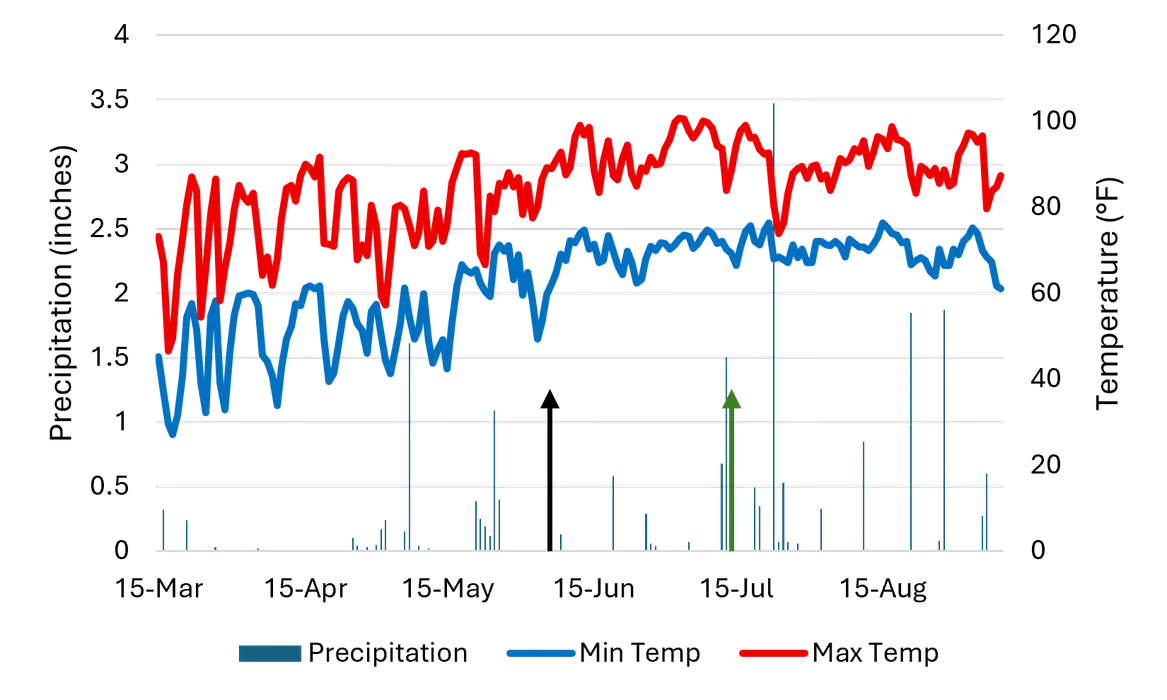
Additionally, early-planted corn experienced high temperatures and limited rainfall during critical reproductive stages (tasseling and silking), further reducing yield potential. Later-planted corn, however, reached these critical stages during periods of more favorable rainfall from mid-July through August, helping alleviate the combined effects of heat and moisture stress (Figure 1).
Figure 1. Daily maximum and minimum temperatures (°F) and precipitation (in.) at NC EcoNET Sandhills Station. No rainfall events >1 in. occurred from March 15 to May 15. Black and green arrows indicate estimated VT–R1 dates for corn planted March 25 and June 1, respectively.
Although later planting provided an advantage in many fields in 2026, this does not necessarily mean that delaying planting will consistently increase corn yields in North Carolina. The benefits observed this year were largely associated with the timing and distribution of rainfall relative to critical crop development stages.
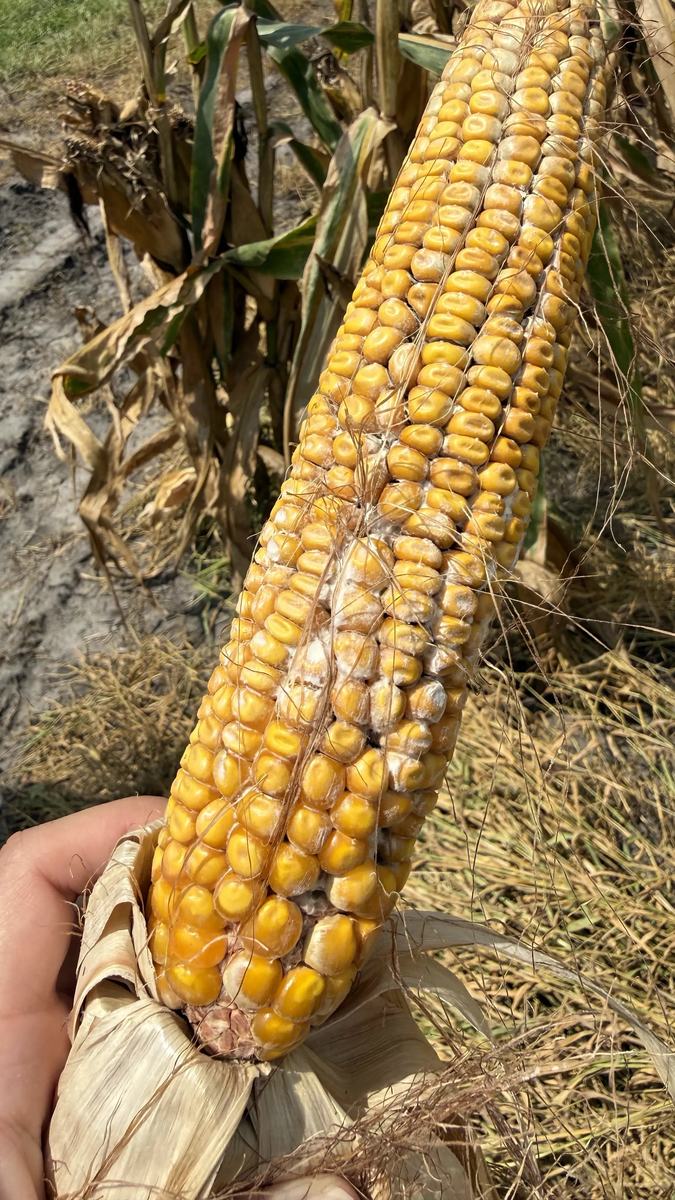
The combination of warm, dry weather early in the season followed by warm, humid weather later in the season, favored the occurrence of ear rots in 2026, decreasing grain quality and marketability of corn grain for feed. The problem was especially challenging for growers without access to grain-drying facilities, who had to leave corn in the field longer to reach acceptable harvest moisture levels. Under favorable environmental conditions, delayed harvest can allow existing ear rot infections to progress, further compromising grain quality and potentially increasing mycotoxin contamination.
Figure 2. Corn ear showing symptoms of ear rot in Plymouth, North Carolina, in 2026. Source: Arindam Mandal
Fields showing substantial ear rot incidence should be prioritized for harvest when feasible, and grain should be tested for mycotoxins when contamination is suspected, particularly when intended for livestock feed.
Lesson 3: The Nitrogen Problem
Nitrogen (N) availability is strongly influenced by soil moisture. The microorganisms responsible for decomposing organic matter and mineralizing organic N depend on adequate moisture, favorable temperatures, and oxygen availability. In 2026, persistent dry conditions likely restricted N mineralization, limited fertilizer N movement into the root zone, and reduced root growth and nutrient uptake. Together, these factors may have contributed to lower N use efficiency.
This year many growers asked whether there is really an advantage to split N applications as many of them did not realize a yield benefit from it in 2026. The reality is that if you do it all upfront, you’ve locked yourself into that expense. Split applications provide flexibility to adjust N management as the season develops. Split applications also reduce the amount of N fertilizer exposed to potential losses early in the growing season, particularly through nitrate leaching or denitrification under wet conditions. However, the effectiveness of this strategy depends on fertilizer source, placement, and weather conditions following application.
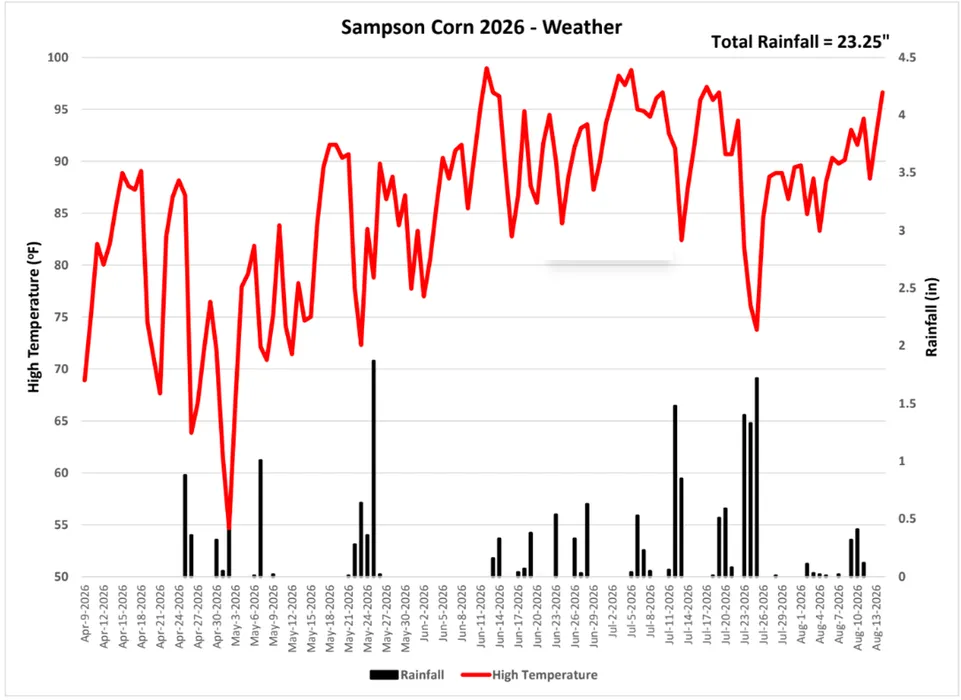
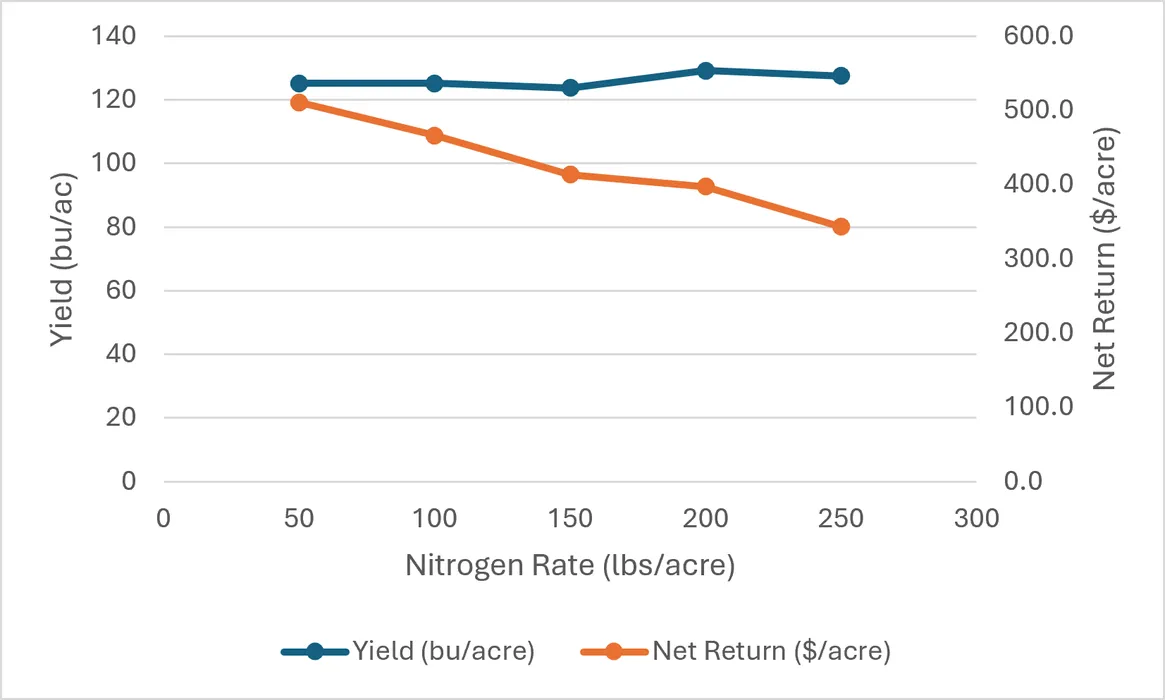
The challenge in 2026 was that, in some areas of the state, rainfall did not return in time to support normal crop development and maximize N use efficiency. In Sampson County, for example, prolonged dry conditions during much of the growing season (Figure 3) coincided with a very limited corn yield response to additional N fertilizer (Figure 4). In this trial, all treatments received 50 lb N/acre at planting, with additional N rates ranging from 0 to 200 lb N/acre applied at V6. Despite these additional sidedress applications, grain yields remained relatively unchanged, while net returns declined considerably as N rates increased. Under these conditions, the additional investment in sidedress N did not pay off.
The lesson from 2026 is not that split N applications are ineffective, but rather that N management needs to be responsive to weather conditions and crop yield potential. A practical split-application strategy is to apply approximately 25–30% of the planned fertilizer N at planting and the remainder around V6, ahead of the period of rapid crop N uptake. However, the total N rate should be based on realistic yield expectations, soil conditions, and field management history. If you decide to cut back on N, you may limit your yield potential if the weather conditions improve and N availability becomes limiting.
Figure 3. Maximum temperature (F) and rainfall (in) in Sampson County, NC during the 2026 corn growing season.
Figure 4. Corn yield (bu/acre) and net return ($/acre) as an effect of nitrogen rates (lbs N/acre) in Sampson County, 2026.
Lesson 4: Extreme Weather Exposed Vulnerabilities in Continuous Corn Systems
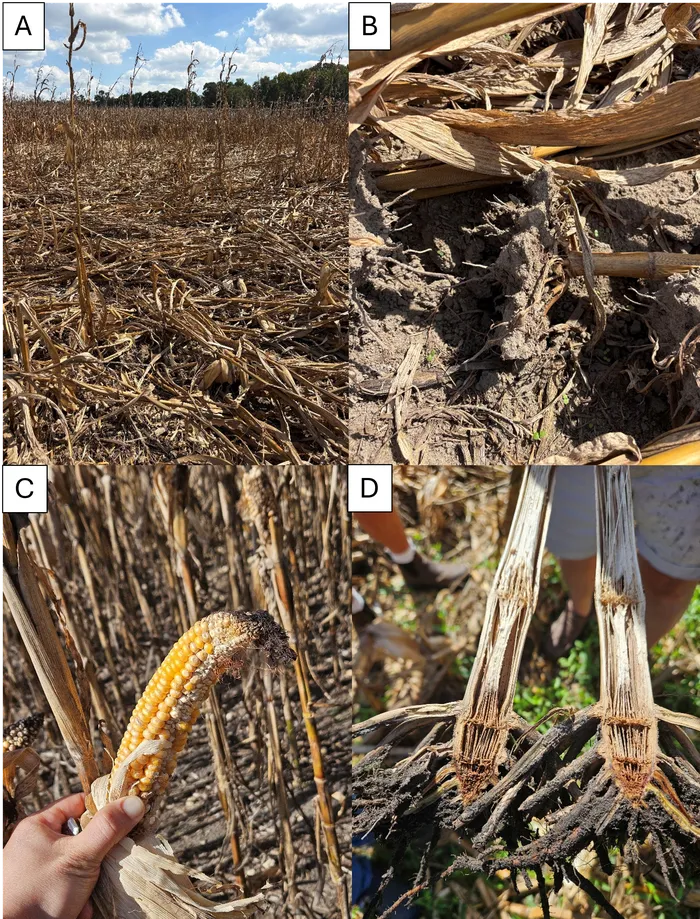
The severe stress that the corn crop was exposed to made the problems with long-term continuous cropping systems more evident in 2026. Continuous corn, especially in no-till systems with large amounts of residue on the surface, poorly drained soils, and receiving an excessive amount of overhead irrigation keeping the leaves wet for extended periods of time, can increase the exposure to residue-borne diseases and certain pests, but in a drought, warm year, plants are under greater physiological stress and may be less able to tolerate root or stalk damage. This year I received several calls from agents regarding problems with lodging and uprooting of corn as well as stink bug damage in continuous corn irrigated fields. Field visits and photographs shared by Extension agents revealed several problems, including symptoms consistent with Fusarium and bacterial stalk rots, root rots, poor root development associated with drainage limitations, and stink bug injury.
Continuous corn increases the chance of disease and pest carryover, while drought further reduces plant vigor and the ability to tolerate those stresses. Although continuous corn itself does not cause stalk lodging, in a high crop stress year, these issues compound each other and can lead to greater yield losses. Keep in mind that rotation does not eliminate drought stress, but it can remove one layer of vulnerability from the system.
Figure 5. A: Corn lodging; B: Poor root development and uprooting; C: Stink bug damage to corn ears; D: Pinkish pith discoloration, typical of Fusarium stalk rot. Pictures: Norman Harrell (A and B) and Victor Gomes (C and D).
Looking Ahead to 2027
The 2026 growing season demonstrated how weather conditions can influence corn response to management practices. As growers begin planning for 2027, here are four key takeaways:
Planting dates: Avoid rushing to plant into unfavorable soil conditions. Consider soil moisture, hybrid maturity, and the expected timing of pollination when making planting decisions. Later planting worked well in some areas in 2026, but that advantage may not repeat every year.
Ear rots: Scout fields for ear rot symptoms before harvest, prioritize harvesting affected fields, and consider mycotoxin testing when grain contamination is suspected. Avoid leaving affected corn standing in the field longer than necessary.
Nitrogen management: Make applications based on realistic yield expectation. Evaluate soil moisture, crop condition, and weather forecast before sidedressing. Additional N may not provide an economic return when drought has severely limited yield potential, but cutting back too early can create N deficiencies if conditions improve.
Crop rotation: Avoid continuous corn, particularly in fields with a history of stalk and root rots. Crop rotation can help reduce disease and pest pressure, making production systems less vulnerable during stressful growing seasons.
Keep in mind that we cannot control the weather, but we can make management decisions that reduce risk, protect profitability, and improve the resilience of our corn production systems.