Seeing Spots on Corn? It’s Likely Holcus Leaf Spot
(Updated: June 3, 2025, 6:43 a.m.)
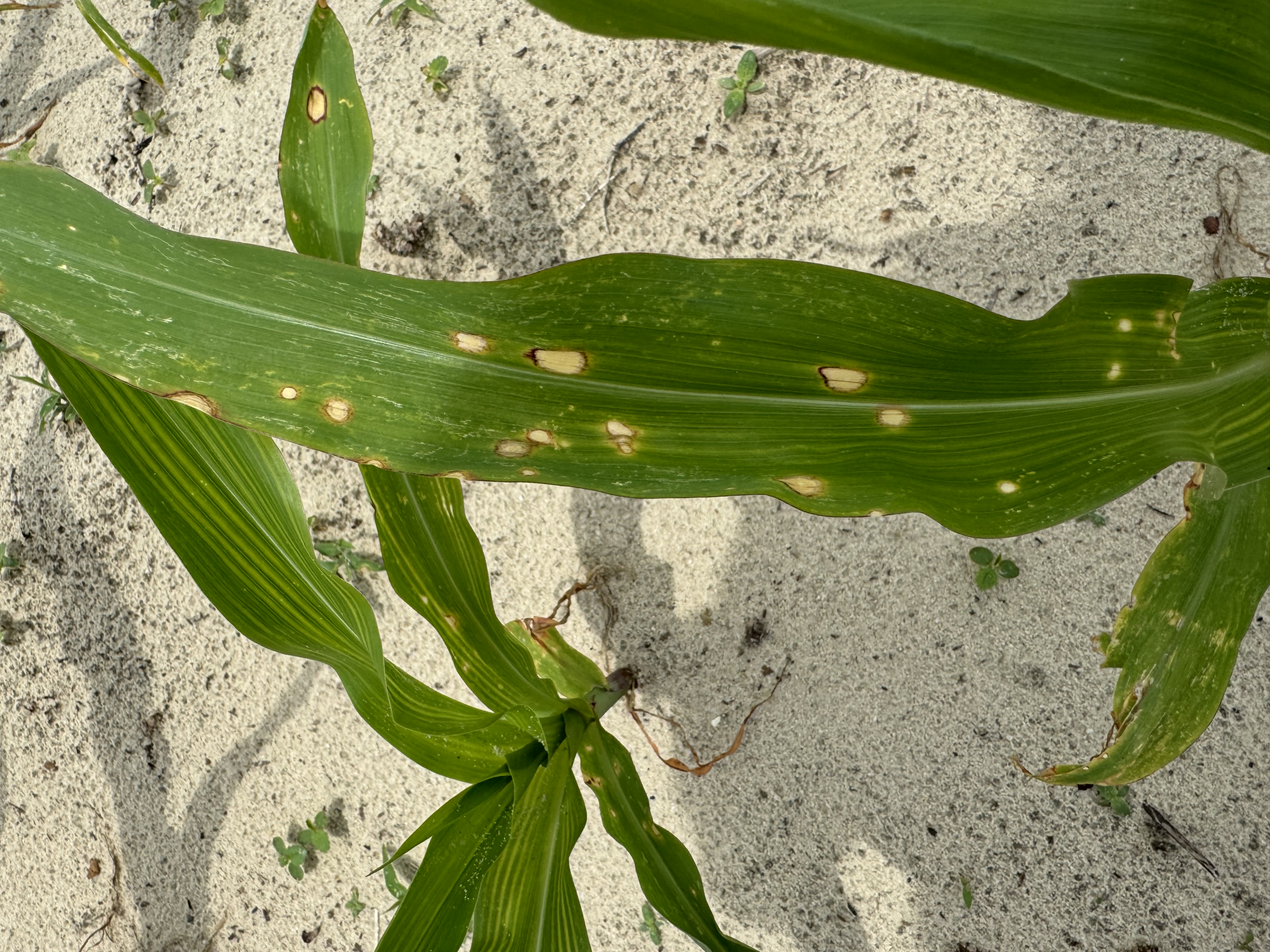
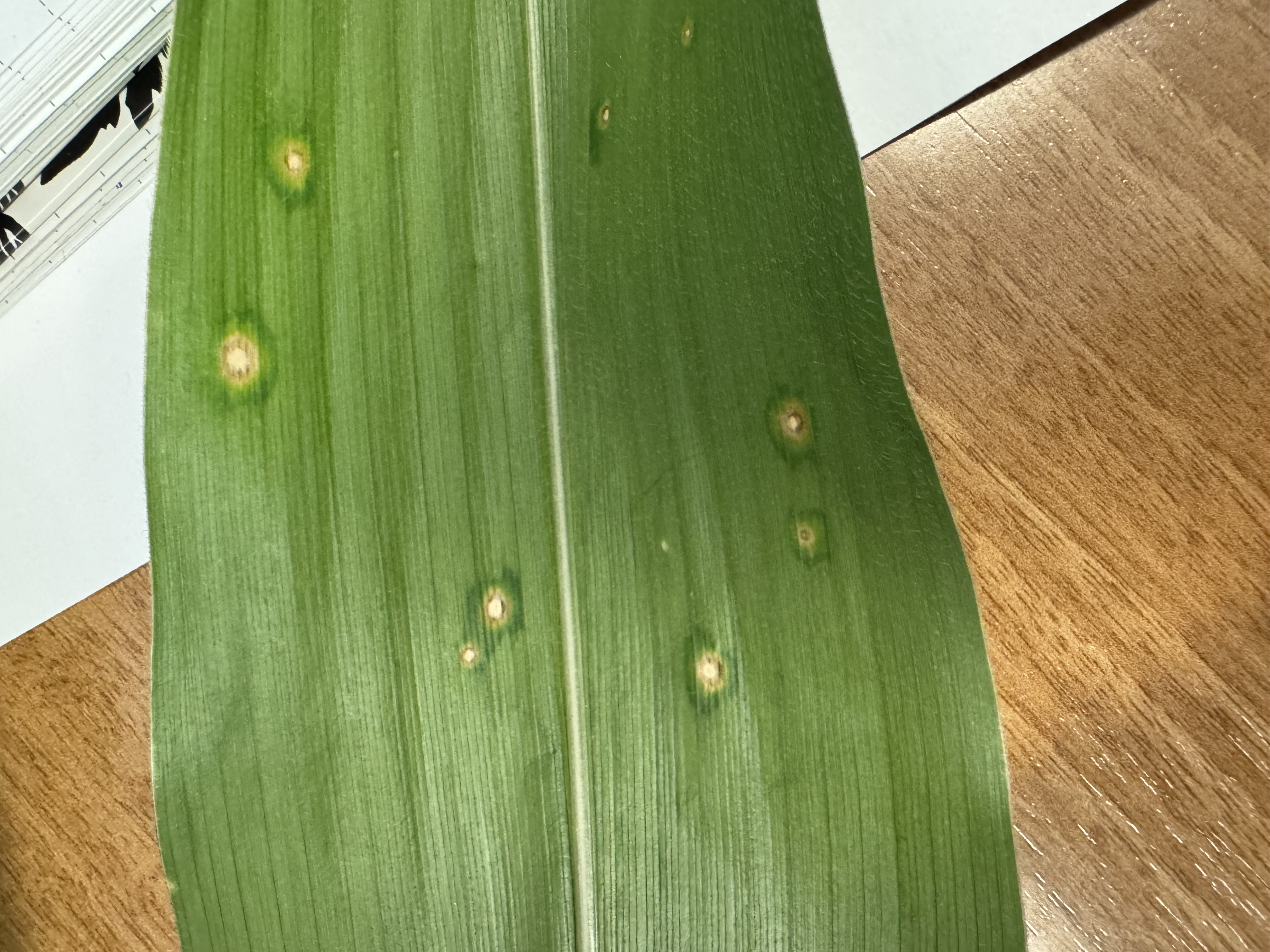
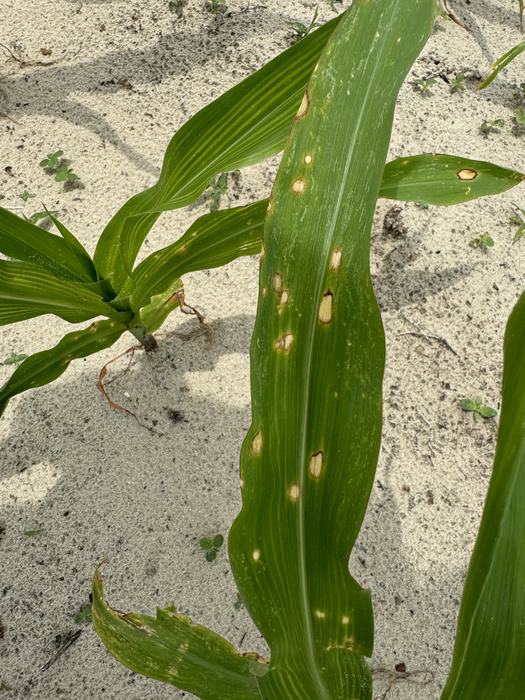
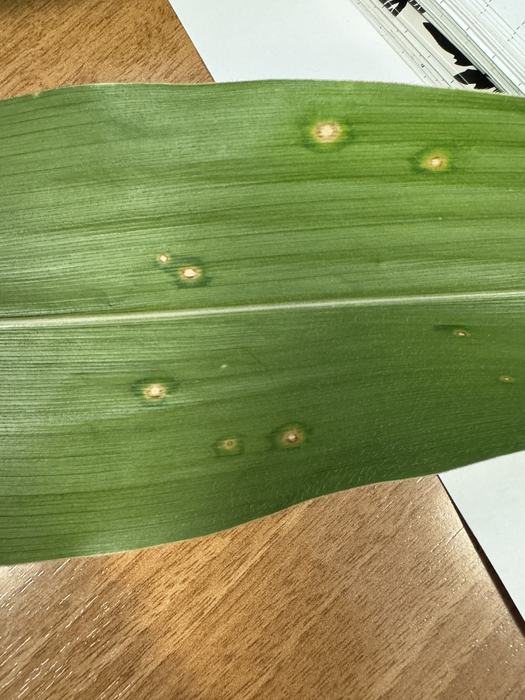
With such a wet May, y’all are probably seeing an uptick in leaf spots on corn, but there’s no need for concern. It’s likely holcus leaf spot, a minor bacterial disease that typically shows up early in the season under warm, wet conditions.
What Can It Be Confused With?
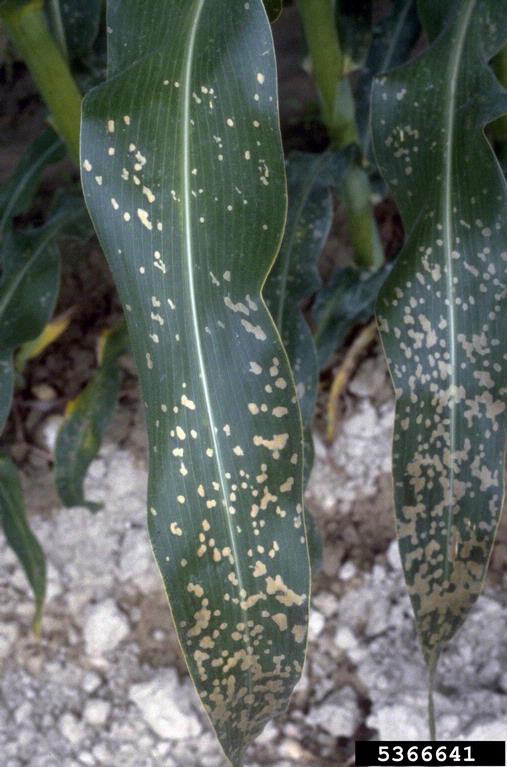
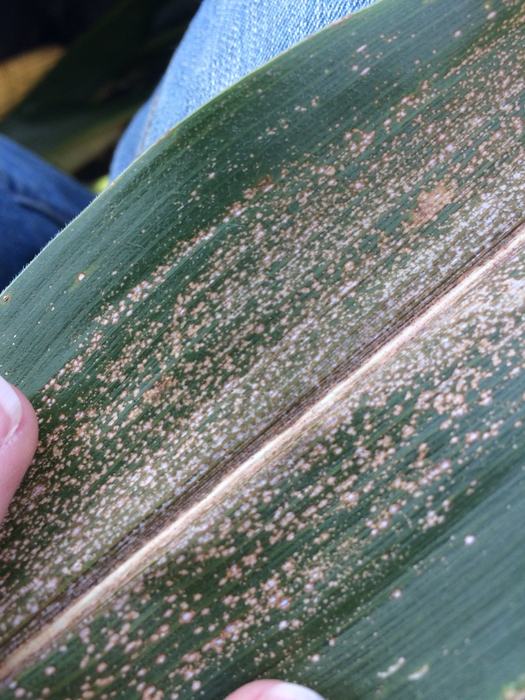
Holcus leaf spot is often mistaken for:- Contact herbicide injury, especially from products like paraquat (Figure 3). Herbicide injury typically appears uniformly on leaves at the same growth stage, and new leaves are unaffected. Look for a gradient of symptoms across the field; if symptoms fade from the edge inward or nearby non-corn plants are also affected, herbicide drift is more likely.
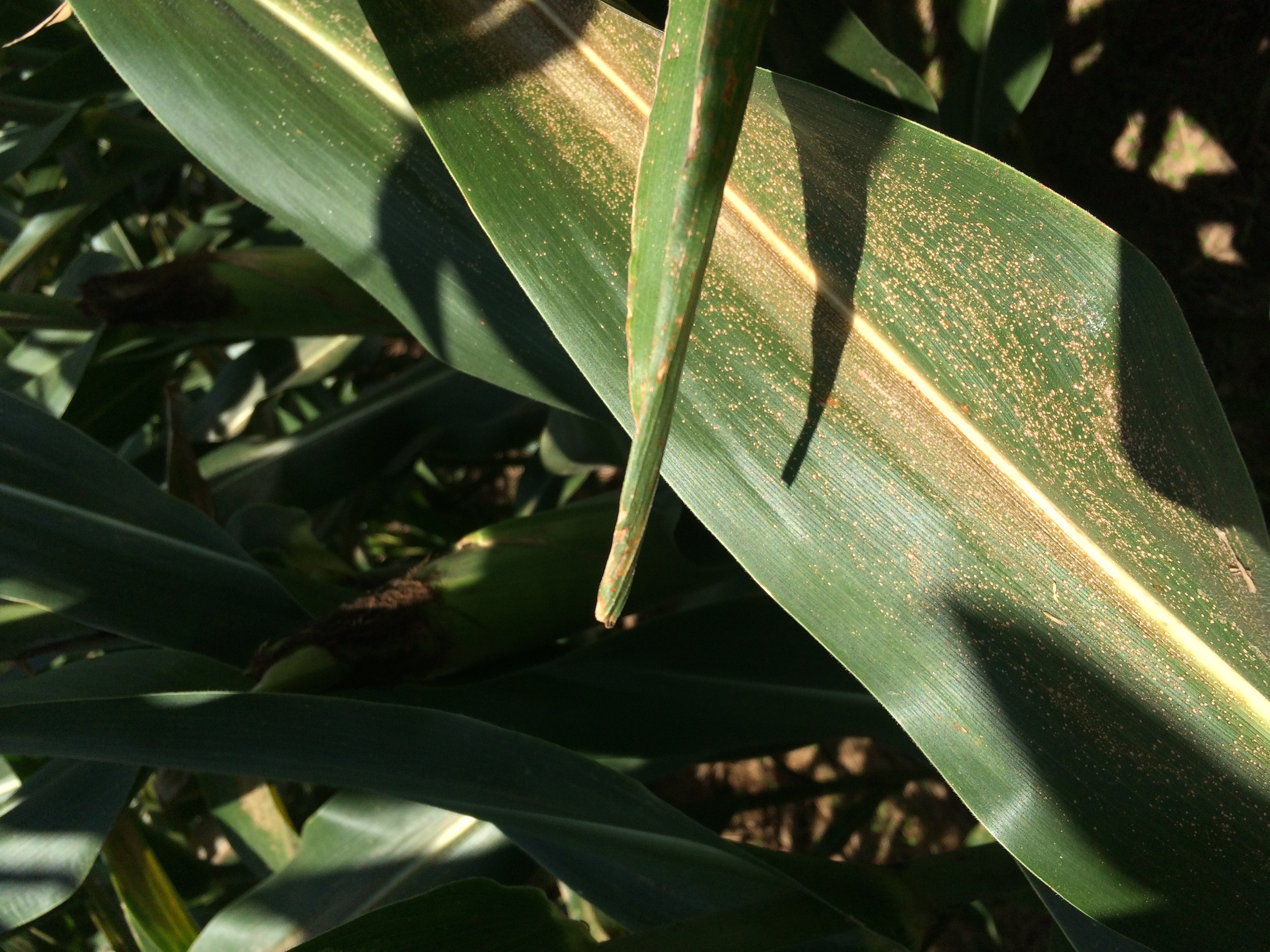
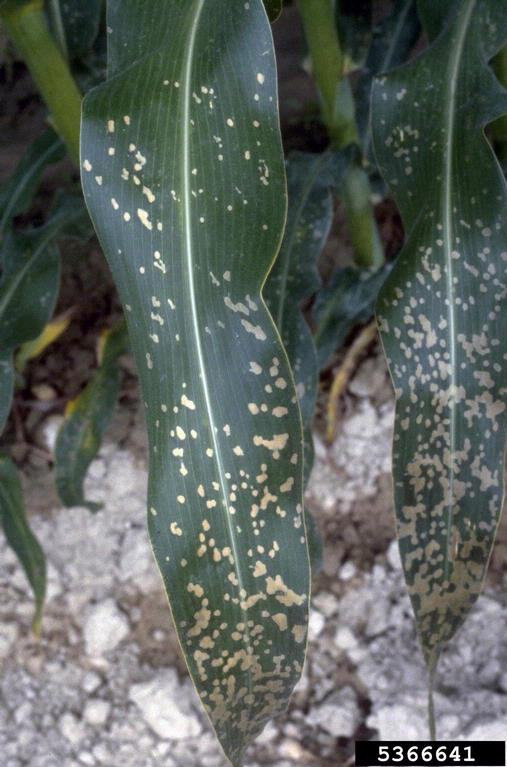
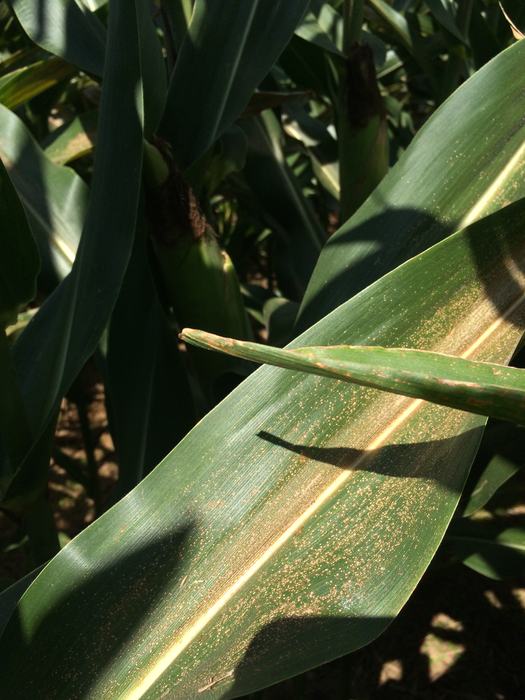
- Eyespot, a fungal disease, which also causes round lesions with a brown border and yellow halo (Figures 4 & 5). However, eyespot lesions are much smaller, more numerous, and more evenly distributed than those caused by holcus leaf spot. They also do not have the water-soaked margins that are more indicative of bacterial leaf spots.
Why Am I Seeing It Now?
This disease tends to appear early in the season, especially in warm (76–86°F), wet conditions following high winds and thunderstorms. The pathogen thrives in wet conditions and spreads via rain splash and storm-driven wind. It can survive in plant debris and infect new tissue through wounds or natural leaf openings. Holcus leaf spot has a broad host range, affecting many grasses and dicots.What’s the Impact?
Holcus leaf spot is considered a minor disease in corn. Yield losses are rare, and even when lesions are noticeable, the primary concern is just a slight reduction in photosynthetic area.How Do You Manage It?
Management is often not required. There are no effective in-season treatments. Fungicides won’t work against this bacterial disease. Most corn hybrids have adequate resistance, and management focuses on cultural practices, including:- Residue management to reduce bacterial inoculum.
- Crop rotation and weed control.
- Tillage, when appropriate, to break the disease cycle.