Riding across the state and from pictures received, I have seen quite a bit of stressed corn for a whole host of different reasons; drought, temperature swings, limited access to starter fertilizer, and maybe even some injury from burndown and/or preemergence herbicides. We need to keep the status of our crop in mind as we start spraying over-the-top.
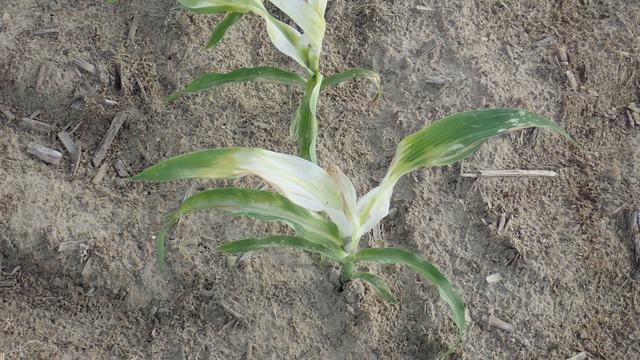
The use of HPPD inhibitor (Group 27) herbicides—such as Callisto (mesotrione; a component of Halex GT), Laudis (tembotrione), and Armezon/Impact (topramezone)—is a common in North Carolina corn. Often called "bleachers," these herbicides are effective, especially if mixed with atrazine, but they can occasionally turn your crop pale yellow to white under certain conditions. Understanding why injury occurs is the first step in preventing it. Here are the primary factors that influence HPPD injury in corn.
- Metabolism and Environmental Stress
Corn tolerance to HPPD herbicides is not absolute; it is metabolism-based. The plant must actively break down the herbicide to avoid injury. Anything that slows down the corn plant's metabolism increases the risk of injury.
- Drought Stress: Under drought stress, a plant’s metabolic processes stall, making injury more likely.
- Cool, Wet Conditions: Slow growth during early spring can hinder the plant's ability to break down these herbicides.
- Temperature Fluctuations: In the past, it seems a sudden cool spell after a period of warm conditions contributed to more corn bleaching.
2. Tank Mix Partners and Adjuvants
What else you add to the tank greatly influences HPPD injury.
- EC Formulations: Many pesticides (including insecticides and fungicides) are formulated as emulsifiable concentrates (EC). These tank mix partners can increase the penetration of HPPD herbicides into corn leaves. More absorption of herbicide into the leaf can mean more injury.
- Adjuvants: While necessary for weed control, certain adjuvants, especially oil-based adjuvants, can also exaggerate injury from the HPPD herbicide. This is especially the case when combining with an adjuvant-loaded glyphosate. This is why Halex GT specifies to use non-ionic surfactant instead of crop oil concentrate or methylated seed oil.
3. Insecticide Interactions
This is one of the most critical "hidden" risks. Certain insecticides can interfere with the enzymes corn uses to break down HPPD herbicides.
- Organophosphates (OPs) & Carbamates: Using an in-furrow OP insecticide (like Counter) or a foliar OP/Carbamate application near the time of your herbicide pass can limit corn metabolism, leading to severe bleaching and stunting.
4. Hybrid Sensitivity
- Genetic variation means some hybrids are naturally better at metabolizing HPPD inhibitors than others. Check with your local seed representative for specific hybrid ratings regarding herbicide sensitivity.
5. Sprayer mishaps
And finally, over the years I have seen several sprayer mishaps contribute to corn injury from HPPD herbicides.
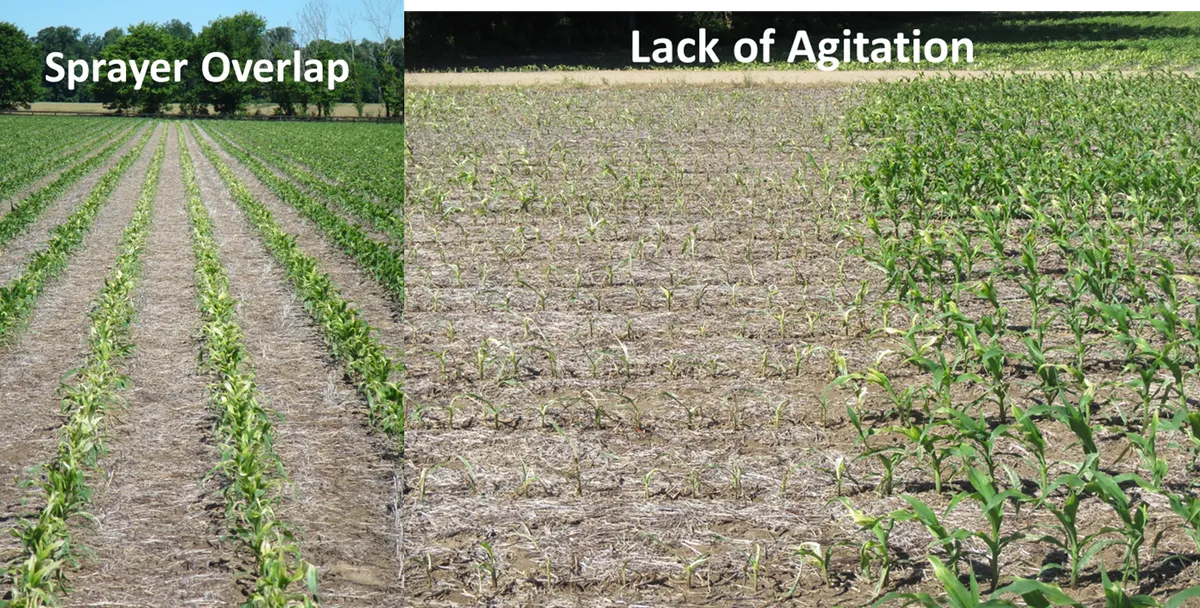
- Sprayer overlap: Because tolerance to the HPPD herbicide is metabolism-based, doubling up the rate in areas of sprayer overlap often leads to bleached corn. I have also seen this occur when applicators must navigate around light poles in the field.
- Lack of agitation: Inadequate agitation can lead to higher rates of herbicide than intended, especially if a load was allowed to “settle out” due to interruption. Once you get back in the field, be sure to thoroughly agitate that load to get all the tank mix components back into solution.